

I thought this month I would give you some insights into one of the chapters of my forthcoming book. This chapter explores the various voices of those who contribute knowledge to the PDA field. So we have:
- academic researchers, based in universities. They provide mainly critiques of PDA from a theoretical perspective, examining the construct and the validity of a PDA profile. People like Liz O’Nions from her early research career days, also developed the EDA-Q.
- parents of children with PDA who write books about their lived experiences of PDA from a parental perspective. These include the seminal work of Jane Sherwin, and the more recent account by Steph Curtis
- the very informative and lucid accounts of adults with PDA such as those of Julia Daunt, Harry Thompson, and Sally Cat.
- educator voices and perspectives as represented in the books of Phil Christie and Ruth Fidler, augmented recently by the accounts of Laura Kerbey, Laura Crane (who both began their careers as special needs teachers).
But the voices and perspectives of professional practitioners who work day to day with PDA youngsters, have not been particularly prominent. I know that Dr Judy Eaton (Consultant Clinical Psychologist) has collaborated with Dr Liz O’Nions in publishing several papers in academic journals which have been helpful.
And of course, we must include the marvellous Kelly Mahler (OT) who developed her Interoceptive Awareness Curriculum which is so valuable in addressing these needs in PDA youngsters. However, the contribution of the Speech and Language Therapist to our understanding of PDA has been notably absent. Until recently…
July 2025 saw the publication of Libby Hill’s book based on her professional experience and expertise as a Consultant SALT with PDA youngsters. I ordered and received my copy. But what did I make of it? Here are a few thoughts:
- On the plus side, the book is highly accessible and readable.
- It makes a valuable and helpful contribution to our specific knowledge about the language profile of children with PDA
- the plethora of case studies which Libby draws on to bring alive her valid and valuable points.
So far so good, but on the downside:
- whatever possessed Libby to entitle her book ‘Born Naughty?’ which was intended as a throwback to the Channel 4 documentary series to which Libby contributed as a consultant in 2015. Some parents I have spoken to felt the title was really unhelpful. One couldn’t get past the title and the front cover.
- My own view is that the title is both regressive in outlook and re-casts doubt on the fundamental positioning of PDA as a subtype of autism. Why not, I thought, call it ‘NOT Born Naughty : Decoding PDA after a decade of discovery in practice’. This would have served fairly and squarely to refute that ancient construction of PDA as a behavioural profile. And put it to bed once and for all. But my concerns went even deeper than the title itself.
- Libby only made a passing reference to Porges’ Polyvagal Theory, and to Dorsal Vagal (DV) and Ventral Vagal (VV) states, without any explanation of these terms and their implications and ramifications for the PDA presentation.
- Some of the references (which I am currently following up for my own book), were incomplete.
- Some references were actually WRONG ! Jane Sherwin’s book is incorrectly and incompletely referenced as ‘My child is not naughty; she has PDA’, when the work is actually called ‘Pathological Demand Avoidance : My daughter is not naughty’. There’s no date of publication, publisher or location cited. Come on Libby! This is basic stuff, and to publish a book with incomplete and inaccurate references is both sloppy and lax. I would have expected better from you given our longstanding professional collaboration, and knowing the quality of your professional reports.
- I also felt that the layout of some of the text had not been proof-edited prior to publication. There were sections which were not formatted consistently, and those that needed to be bullet-pointed were not. I don’t recognise the publisher at all, and do not know what editorial services they provide, so I cannot comment further.
- But for me, a big kick in the teeth was Libby’s almost complete lack of consideration of the role and contribution of an Educational Psychologist in the team of professionals who assess and work with PDA children. Clinical Psychologist roles are detailed- though somewhat superficially, and strangely- in the chapter on co-occurring conditions in children with PDA. (pp 60-61). It might have been more palatable for me to read the term ‘Practitioner Psychologist’, which encompasses, for the purposes of the HCPC, both Educational and Clinical Psychologists.
- Among my other concerns was Libby’s construction of PDA as a trait-based profile of autism. My professional opinion based on 15 years of developing my knowledge about PDA tells me it is much deeper and more pervasive in impact than ‘traits’ would be expected to be.
- So all in all not the depth of insight that I had been expecting from Libby, given her work over the last decade or so, in PDA.
- But a useful addition to home, school, or workplace library, I suppose.
And now, onto my own voice and perspective…
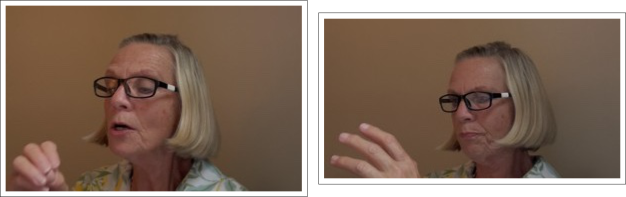
I was recently contacted by a major global broadcast media outlet. Their investigative documentary team are producing a programme in connection with the forthcoming SEND review (scheduled by the UK government to be in October 2025).
Specifically I was engaged as an expert in PDA – albeit uncredited and unpaid. I was delighted to be able to provide the Associate Producer with answers to her highly relevant questions about PDA. The background interview, conducted over the Teams platform, lasted just over an hour. She was extremely grateful for my level of knowledge, expertise, and insights which I provided. I’ll keep you updated on the broadcast date in the UK.
And finally… YOUR VOICE, YOUR PERSPECTIVE…
Can I urge all parent groups, charities, and other SEND organisations and professionals to ensure that your voices and perspectives are heard when the Government’s proposed White Paper on the future of SEND in England and Wales is published for consultation in October (as I understand it, at the time of writing). I’m hearing talk of planned reductions in the availability of various types of Alternative Provision, which is the cornerstone of many of the EOTIS programmes I have designed for youngsters with PDA.
I hope you all enjoy the rest of the summer break in the UK and beyond.
Warmest wishes,
Hilary